
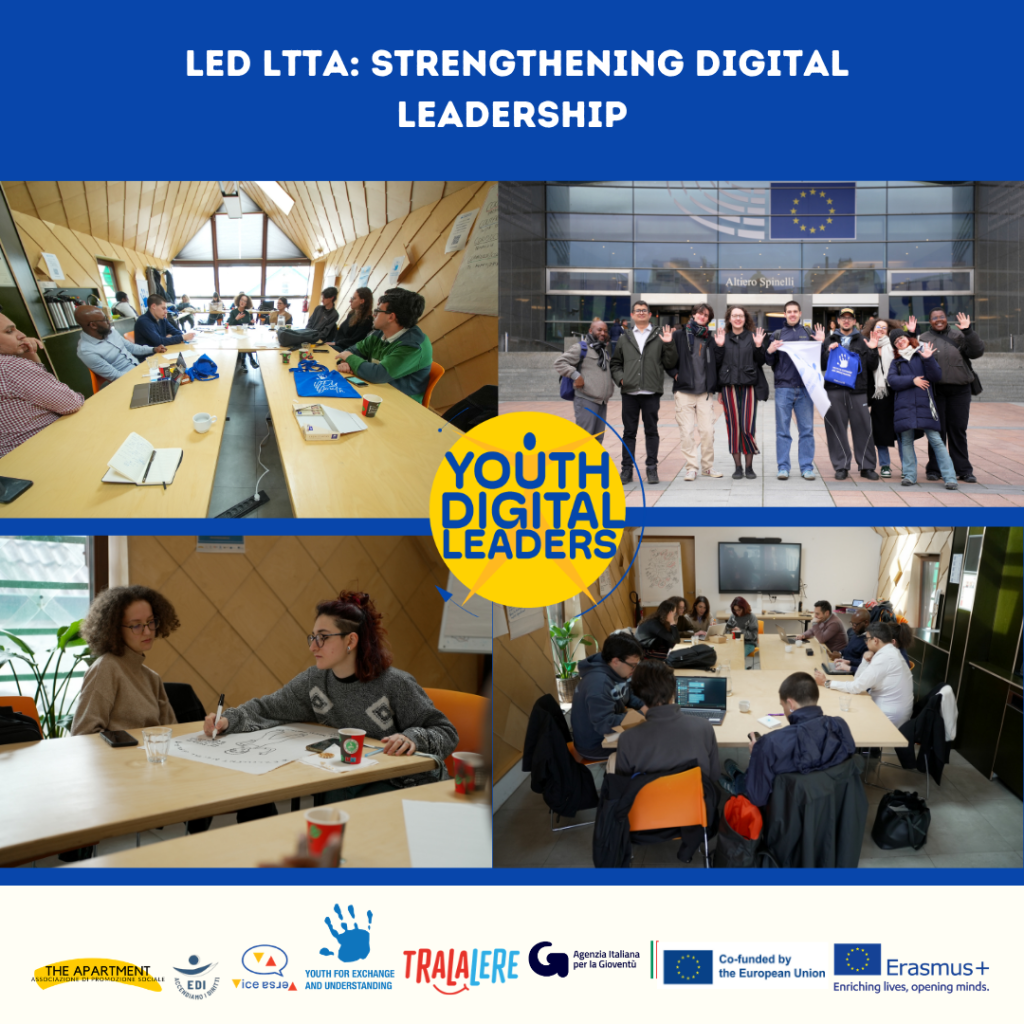
From March 24–26, YEU hosted the Learning, Teaching, and Training Activity (LTTA) in Brussels for the EU co-funded project ‘LED – Youth Digital Leaders’ (European youth workers as active agents in the promotion of digital resilience and online safety of vulnerable adolescents. The event brought together 10 youth workers from Belgium, Italy, France, and Czechia for three days of intensive capacity building.”
The training focused on empowering youth trainers in digital leadership, online safety, and digital empowerment. Through group dynamics and discussions, the participants explored how to better understand digital risk, create certification procedures and Policy Roadmap to be adopted by this upcoming network.
On the first day, our participants got to know each other, and learned about each others’ skills and aspirations as digital leaders in the making. They were introduced to the “4Cs risks” that come with digital spaces: content risk, contact risk, conduct risk, contract risk. Being savvy in digital and cyber safety is a key asset for future youth workers, and participants analysed case studies to practice identifying risks. Participants also discussed the place of social media in their own lives, and the role that youth work could have in these channels. Finally they focus on the emotional and cognitive impact of social media. 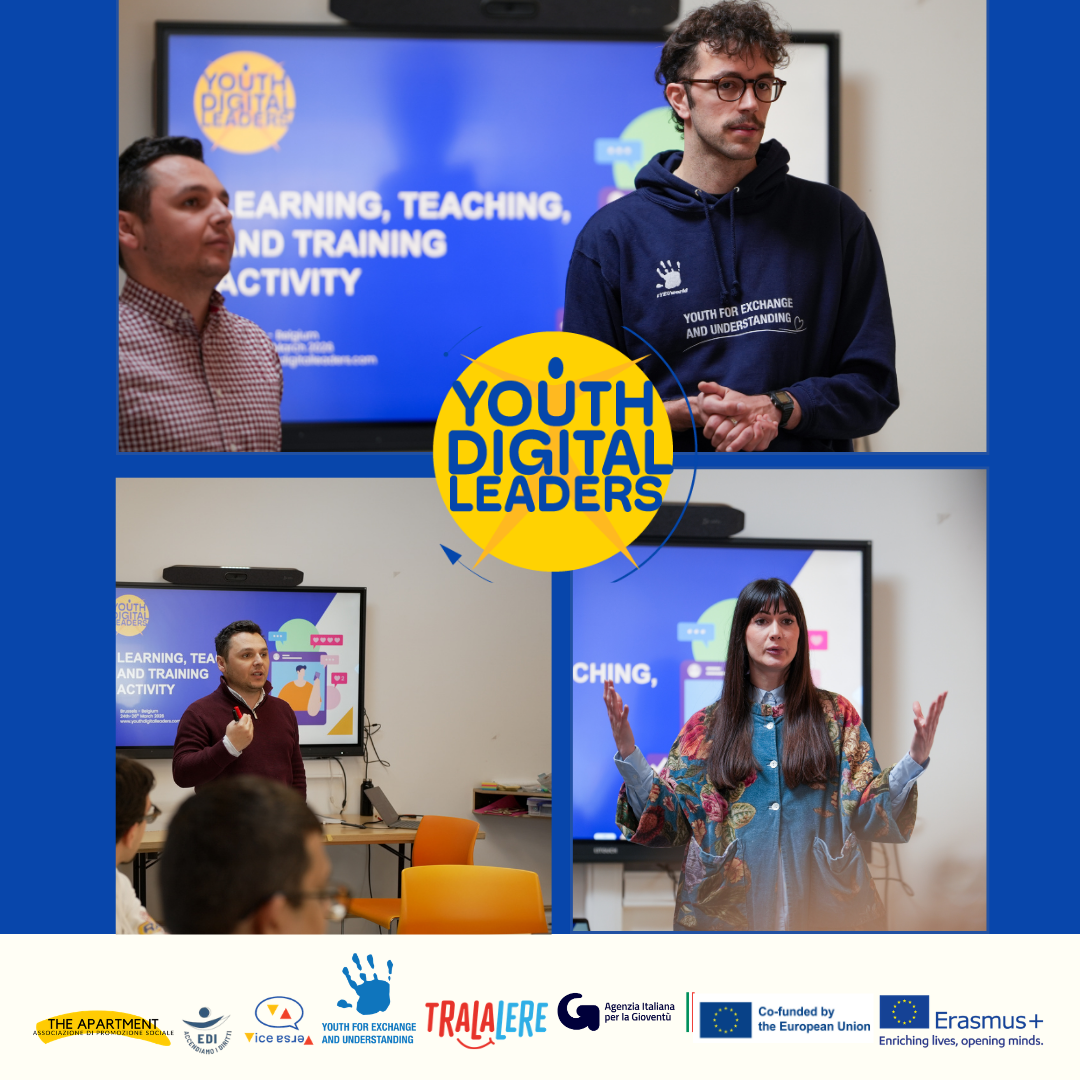
The second day was focused on incorporating digital skills and knowledge into youth work. Participants workshopped their ideal digital leader and discussed their own strengths and challenges to find room for improvement. After identifying the most important digital tools in working with young people (like Paddelet, identifying fake news, AI and more), the participants co-created exercises for each other, and for young people more broadly, to become more confident in their digital skills towards becoming a digital leader.
Finally, the last day was dedicated to exploring how youth contact points could be built, and could sustain the test of time. Participants used the knowledge and skills they acquired in the previous activities to draft objectives and goals for youth organisations to promote safe and dynamic digital spaces for young people.
To wrap up the experience, the group visited the European Parlamentarium to connect our work with the wider European context.
